
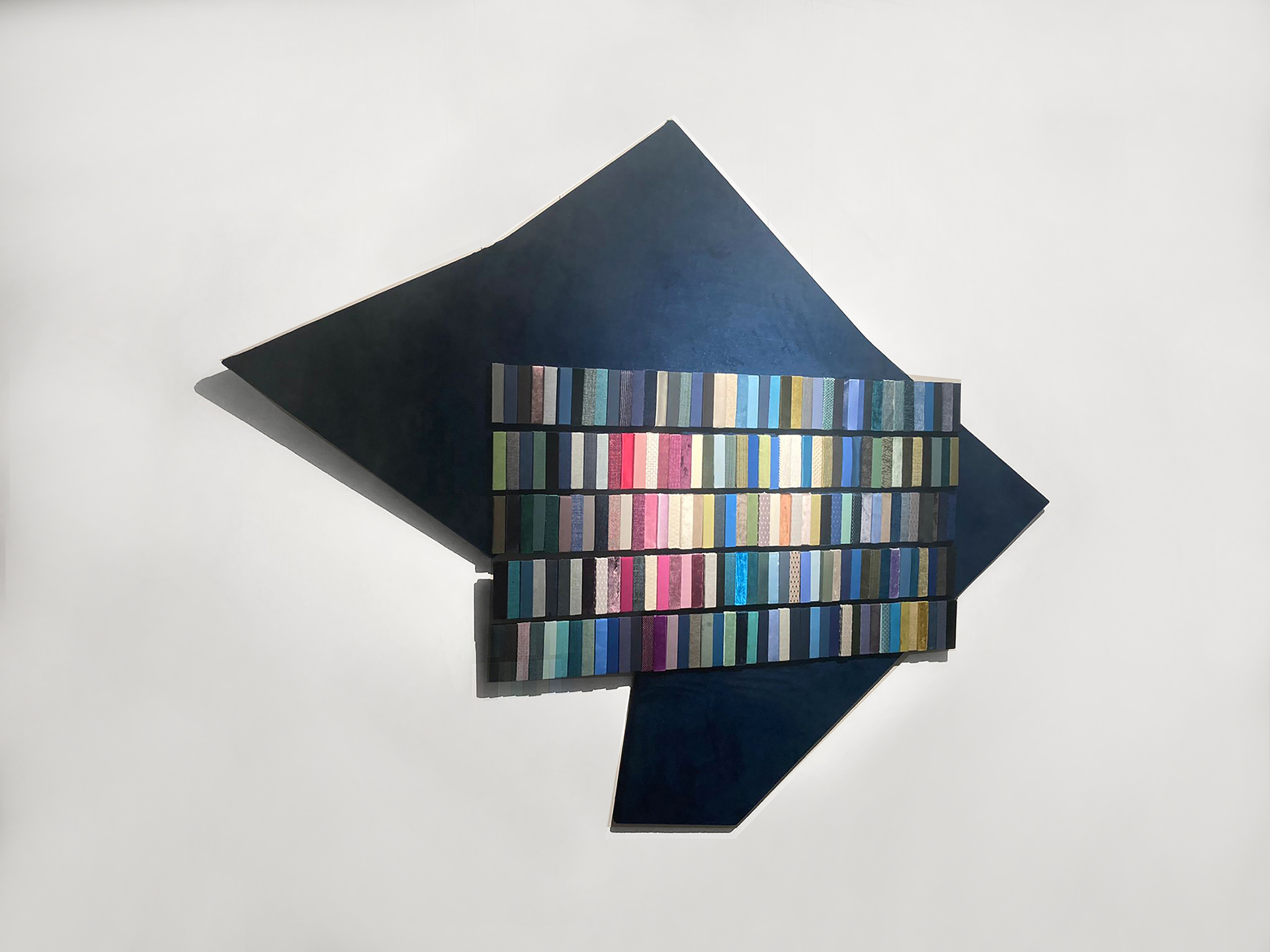
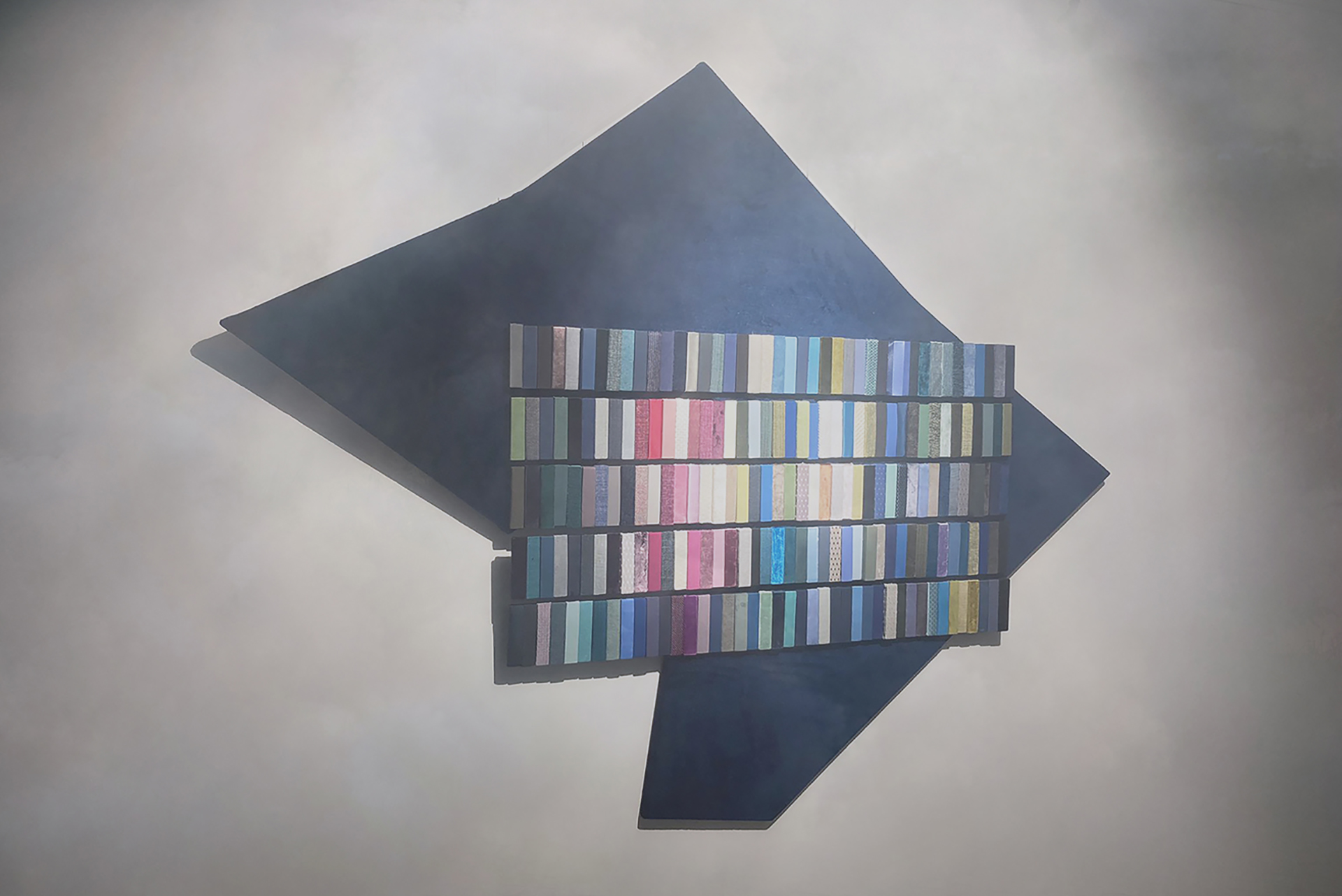
Des plantes et des fleurs sur le velours du soir, 2023
wood, fabric, iron, scented essences sprayed on fabrics
180 x 220 x 20 cm
An immersive and inclusive work of art, designed to be enjoyed also by blind people.
Often in Monica Gorini’s works the role of the materials used and their sensory, imaginative and metaphorical possibilities are already revealed in the titles, evocative and verbal syntheses of experiences.
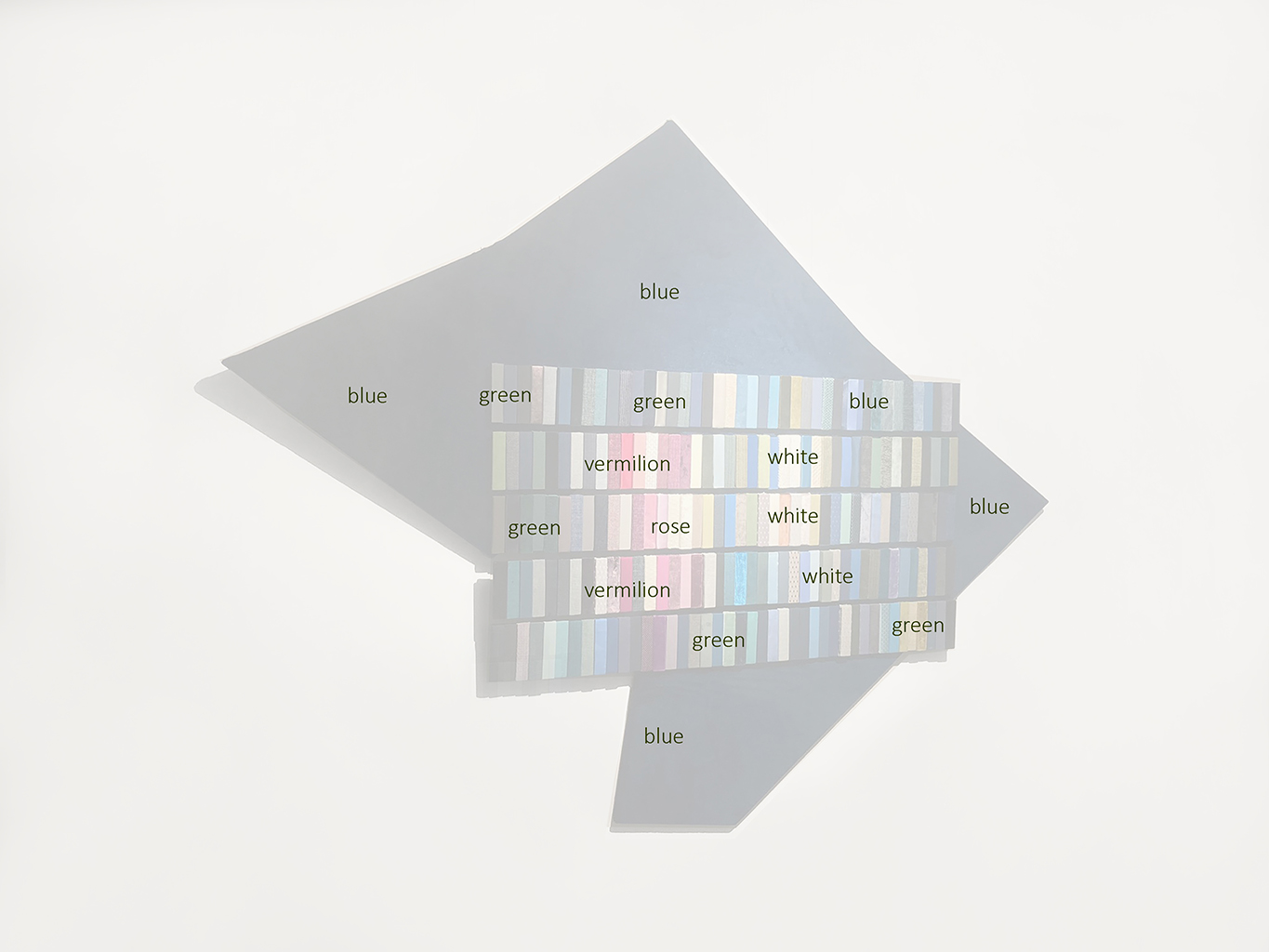
The sculpture Des plantes et des fleurs sur le velours du soir is a transposition of a natural vision. A frame of the Jardin d’eau with white and vermilion water lilies on an expanse of leaves in which the element of water is dominant.
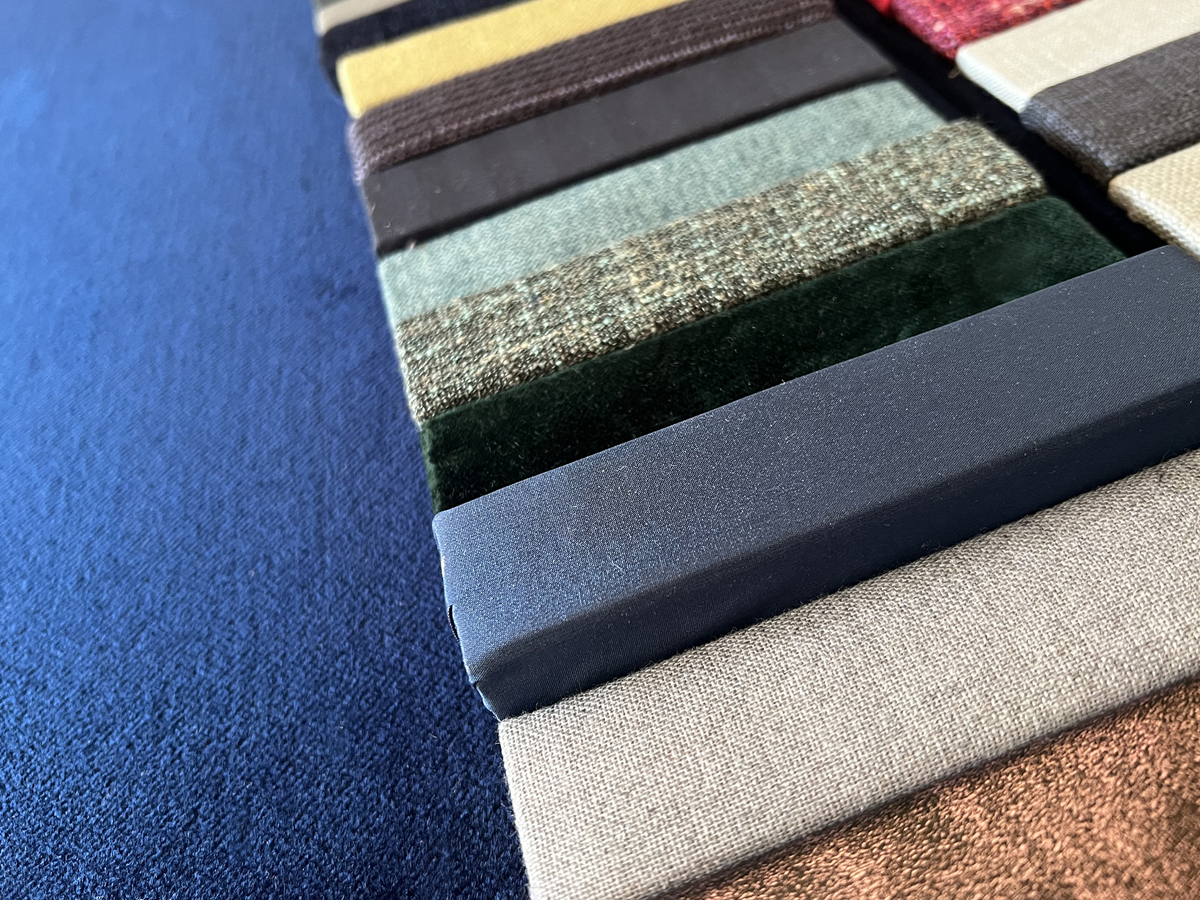
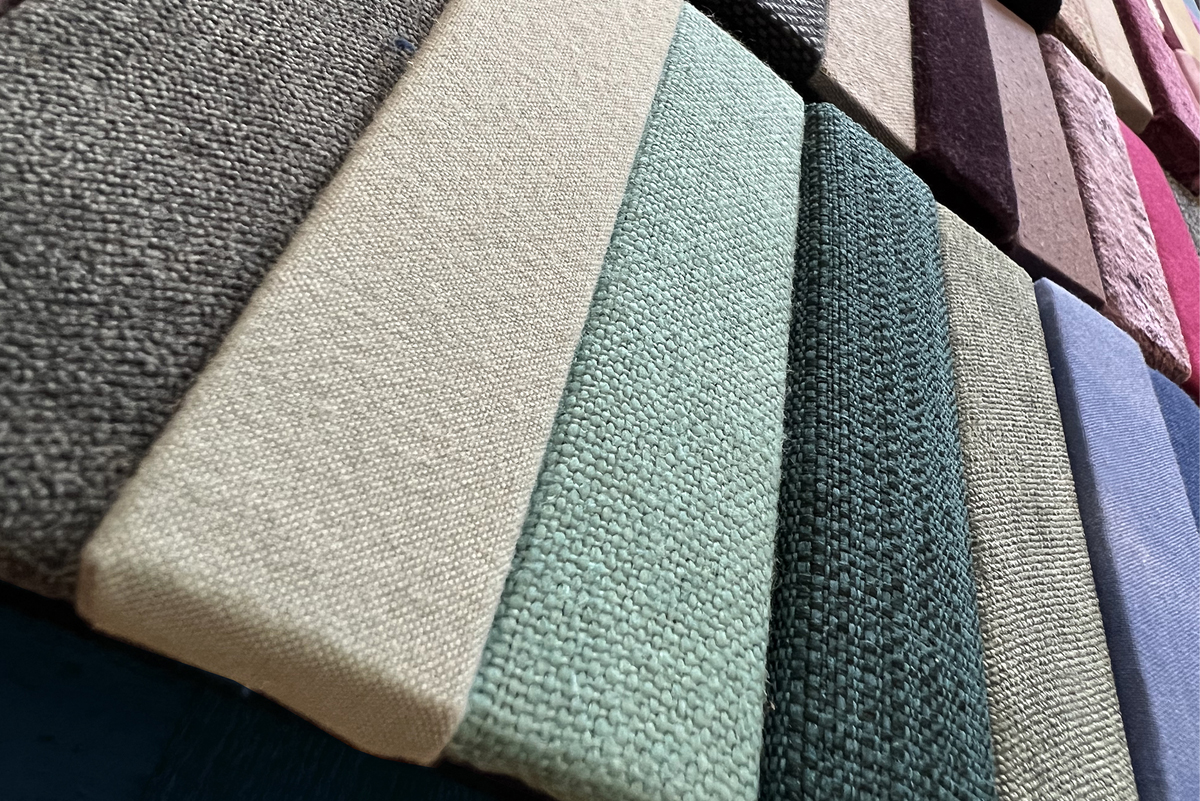
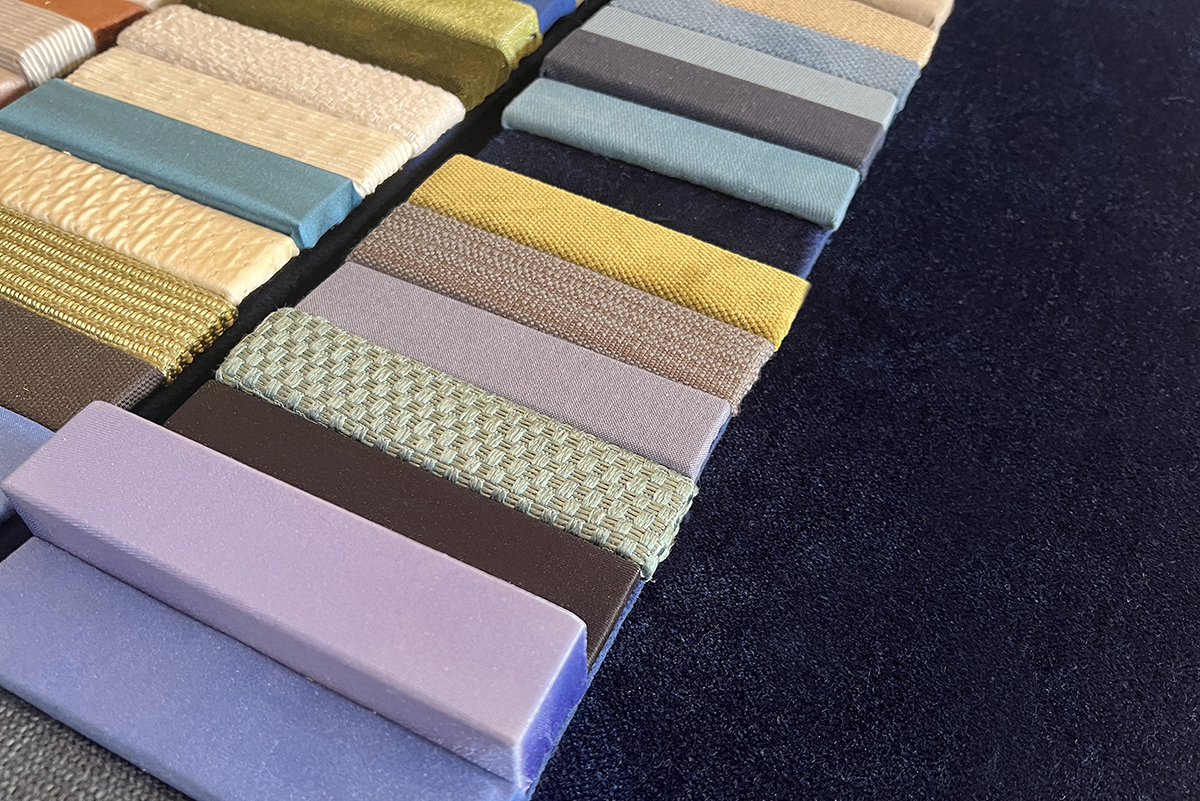
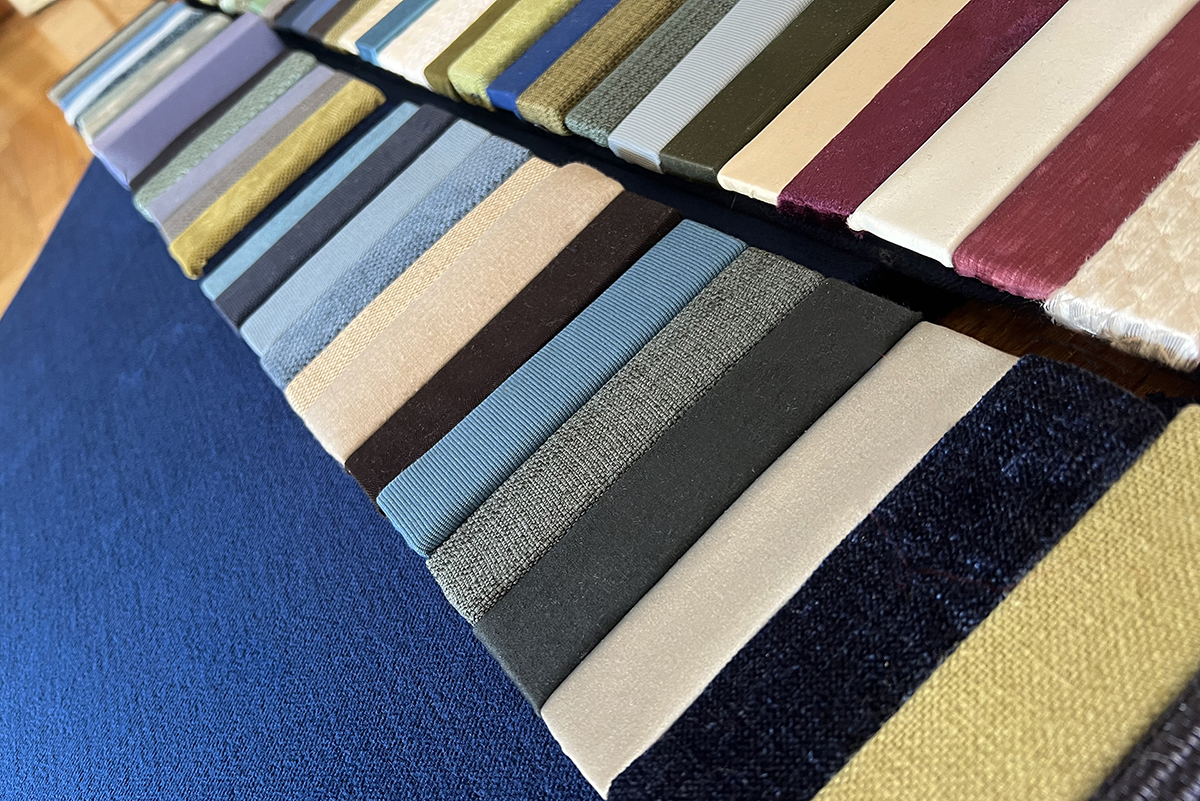
In the narration of the vision, Monica Gorini has created the idea of movement through a combination of tiles of different heights; Piano-like keys covered in textiles of different textures, to be touched and smelled, as well as seen, because the work is conceived with the intention of working with more refined and slower modes of perception than sight.
The artist has studied a correlation between colors and textures not only to create a symphony of tactile sensations but also to guide the audience in exploration. Different fabrics in different shades were chosen for the Vermilion of the Atropurpurea Waterlily, with all the related hues, while cotton fabrics, similar in texture and substance, were used for the whites and creams of the Alba Waterlilies.
Other fabrics similar in tactility guide the audience, despite closed eyes, in “reading” the shades of greens and blues. In the background is a precious cashmere fabric. Instinct leads to the direct movement of resting both hands on the “keys” to “play” adjacent or multi-row colors. The chords drawn in two, three, four colors are also to be read vertically and on several rows separated from each other.
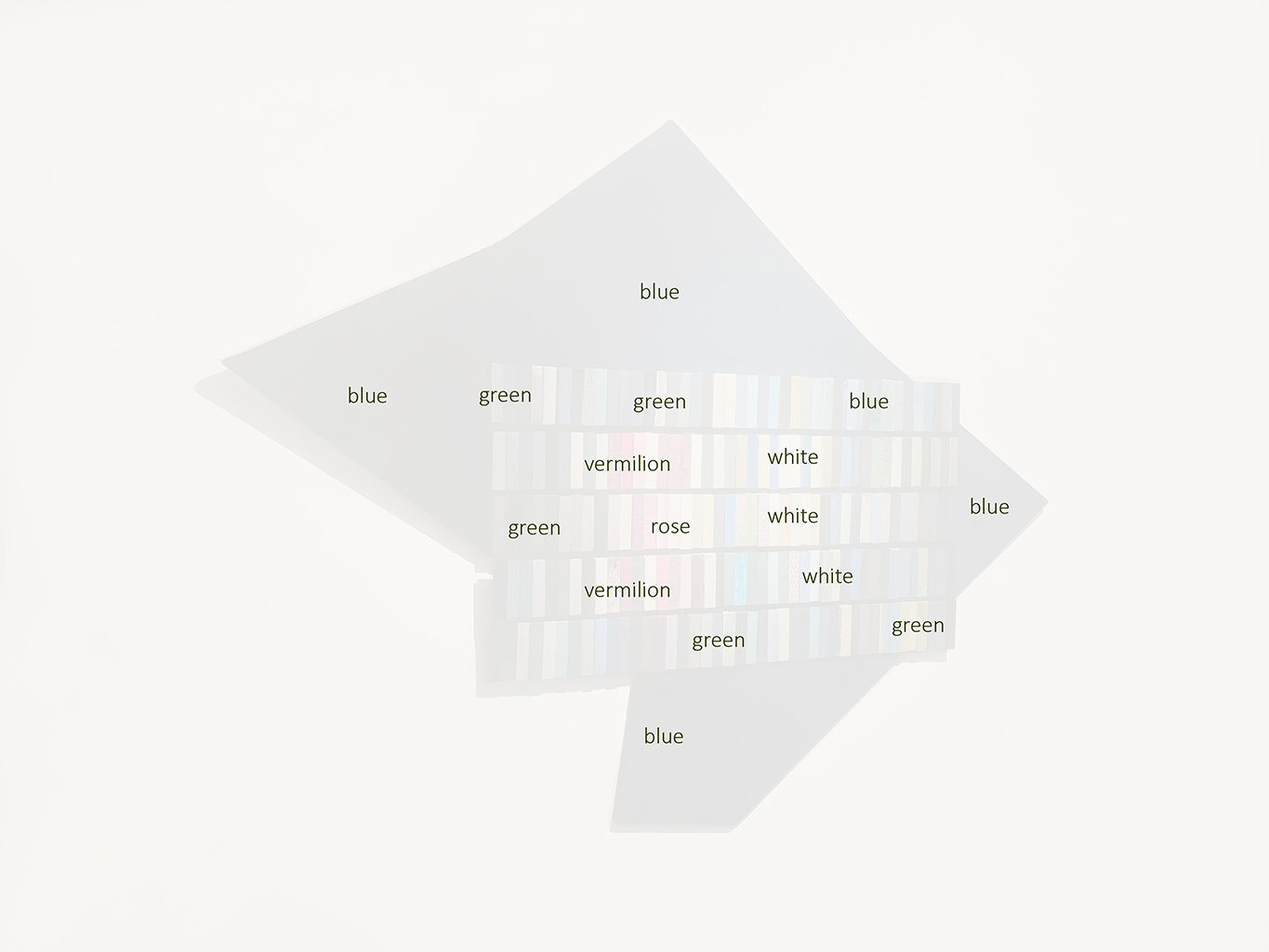
As visitors explore with their hands by adhering them to the rectangular shape of each palette, they are also guided through an olfactory journey as four scents specially commissioned from master perfumer Christopher DiCas and created especially for the work waft over the four dominant hues: vermilion pinks, whites, shades of green, and blues.
The complete installation is to be experienced in an environment where it can be accompanied by the smoke machine and a freshly scented essence to facilitate the kinaesthetic experience.
///
Un’opera d’arte immersiva e inclusiva, progettata per essere fruita anche dalle persone non vedenti.
Spesso nelle opere di Monica Gorini il ruolo dei materiali utilizzati e le loro possibilità sensoriali, immaginative e metaforiche sono svelati già nei titoli, sintesi evocative e verbali di esperienze.
La scultura Des plantes et des fleurs sur le velours du soir è la trasposizione di una visione naturale. Una cornice del Jardin d’eau con ninfee bianche e vermiglie su una distesa di foglie in cui l’elemento acqua è dominante.
Nella narrazione della visione, Monica Gorini ha creato l’idea di movimento attraverso una combinazione di piastrelle di diverse altezze; tasti simili a quelli di un pianoforte, rivestiti in tessuti di diverse texture, da toccare e annusare, oltre che da vedere, perché l’opera è concepita con l’intenzione di lavorare con modalità di percezione più raffinate e lente rispetto alla vista.
L’artista ha studiato una correlazione tra i colori e le texture non solo per creare una sinfonia di sensazioni tattili, ma anche per guidare il pubblico nell’esplorazione. Per il Vermiglio della Ninfea Atropurpurea, con tutte le tonalità ad esso collegate, sono stati scelti tessuti diversi in diverse nuance, mentre per i bianchi e i crema delle Ninfee Alba sono stati utilizzati tessuti di cotone, simili per texture e sostanza. Altri tessuti simili per tattilità guidano il pubblico, nonostante gli occhi chiusi, nella “lettura” delle tonalità dei verdi e dei blu. Sullo sfondo un prezioso tessuto di cashmere. L’istinto porta al movimento diretto di appoggiare entrambe le mani sui “tasti” per “suonare” colori adiacenti o su più file. Gli accordi pensati a due, tre, quattro colori sono da leggere anche in verticale e su più file separate tra loro.
Mentre il visitatore esplora con le mani facendole aderire alla forma rettangolare di ogni tavolozza, viene anche guidato attraverso un percorso olfattivo, poiché quattro profumi commissionati appositamente al maestro profumiere Christopher DiCas e creati appositamente per l’opera, sono stati diffusi sulle quattro tonalità dominanti: il rosa vermiglio, i bianchi, le sfumature dei verdi e dei blu.
L’installazione completa dovrebbe essere vissuta in un ambiente in cui possa essere accompagnata dalla macchina del fumo, per facilitare l’esperienza cinestesica.