
Said Matsuo Bashò, one of Japan’s greatest poets of haiku poetry.
The whims of heaven
are the seeds
of art.
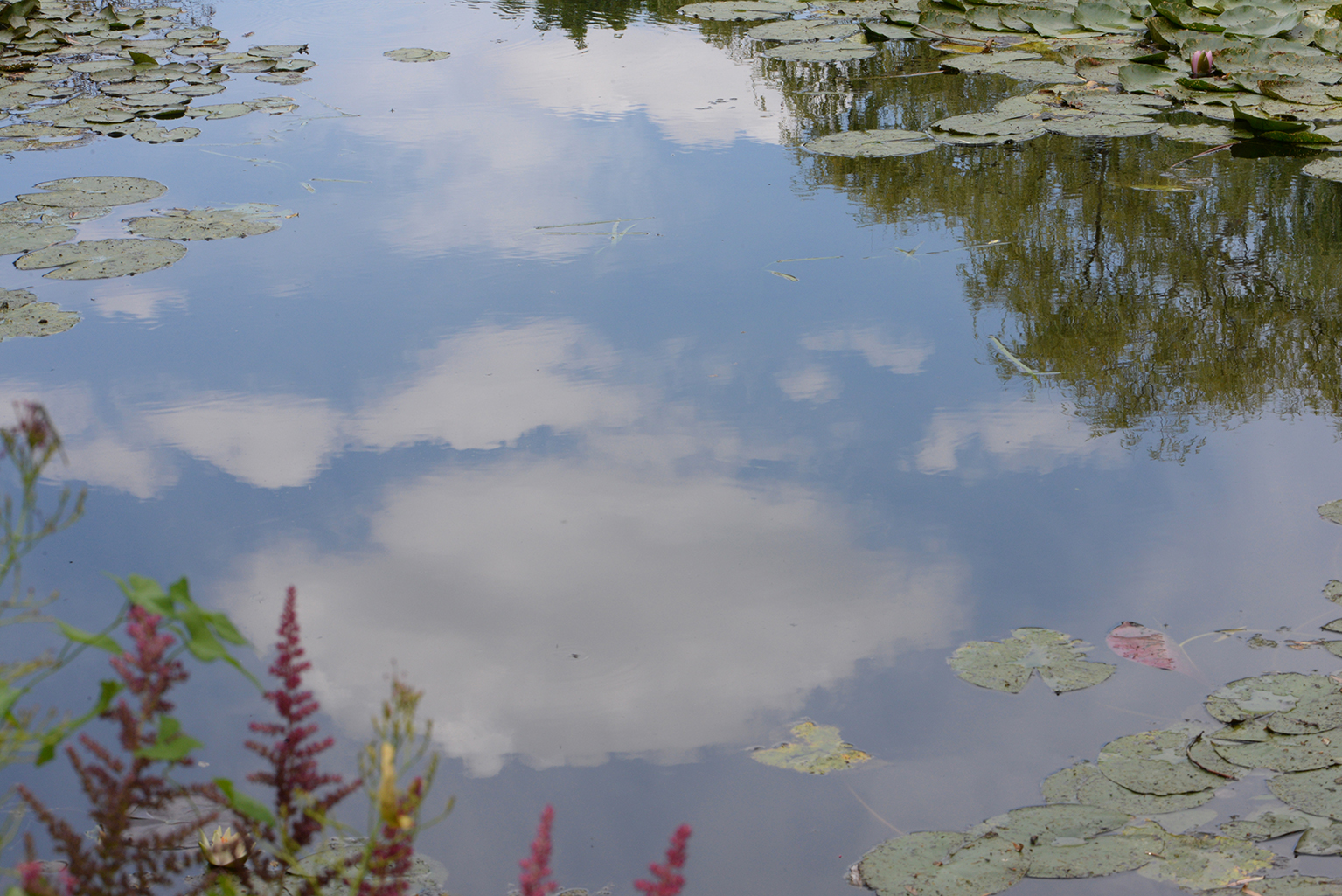
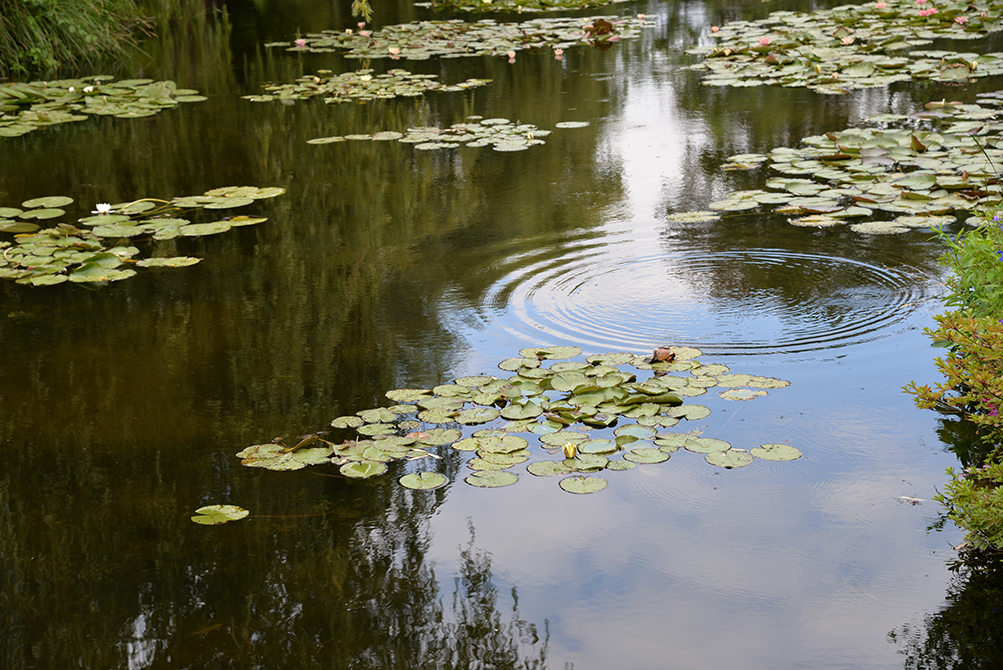
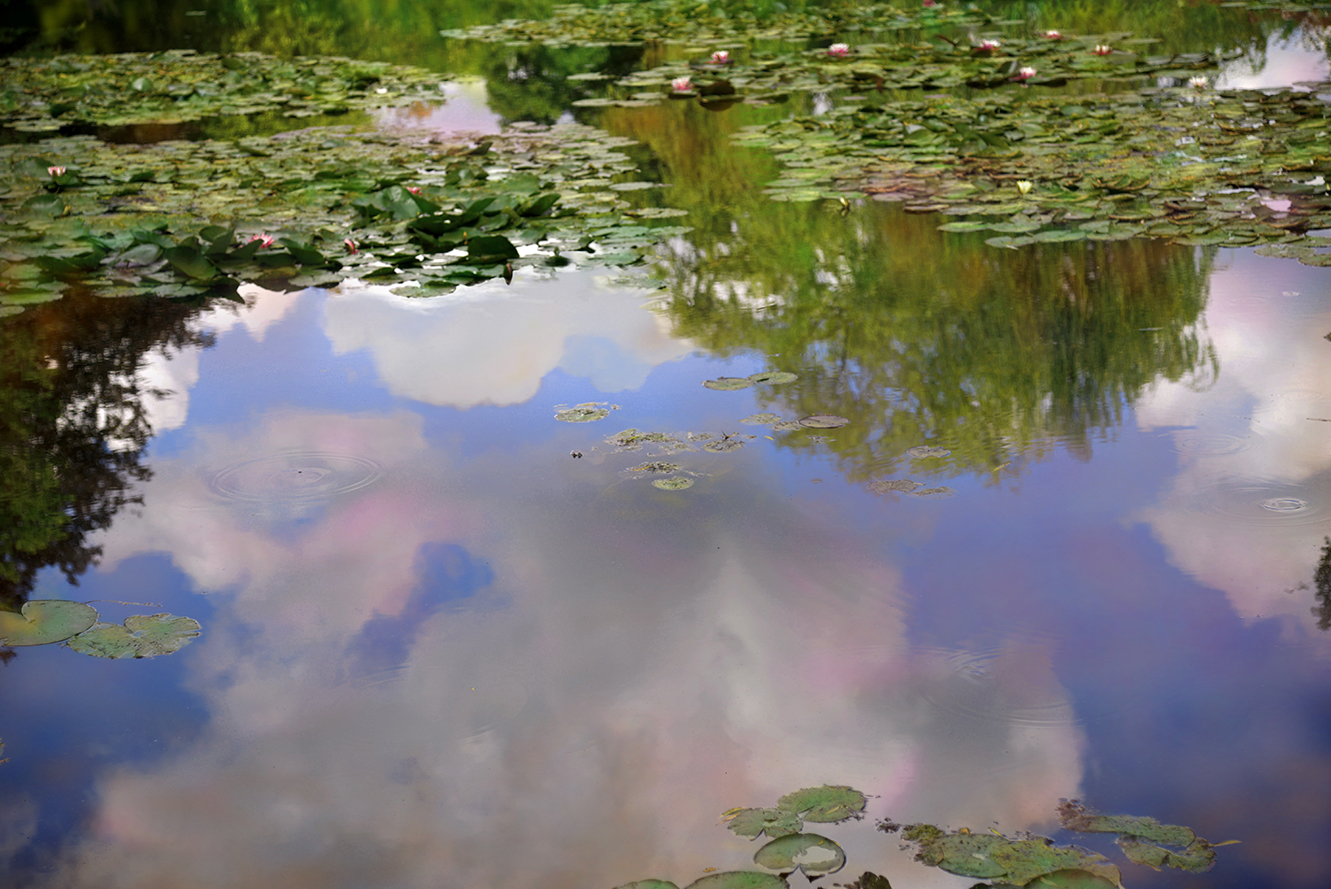
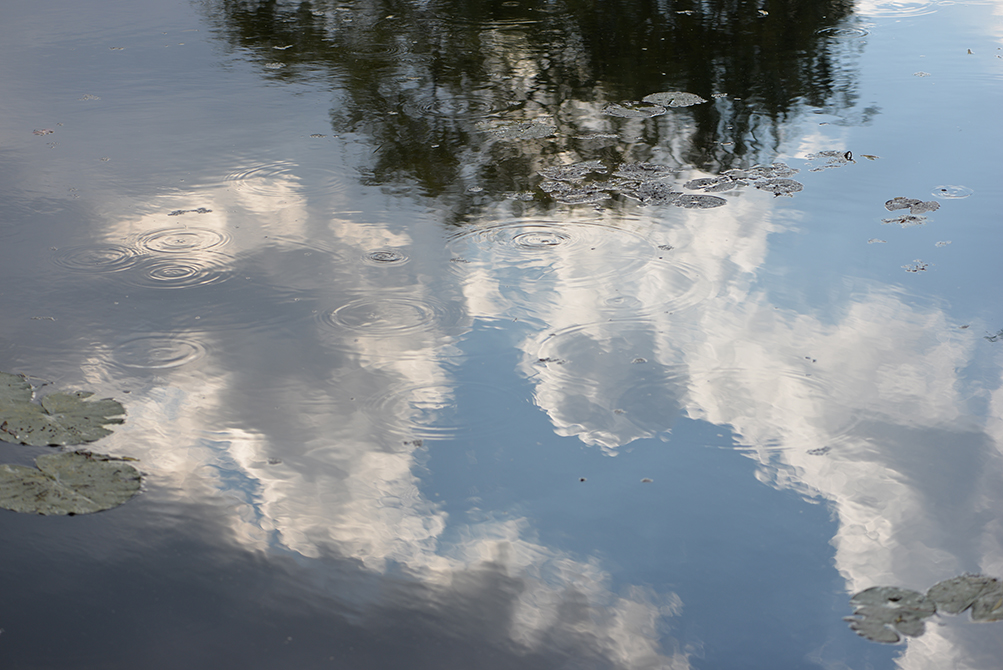
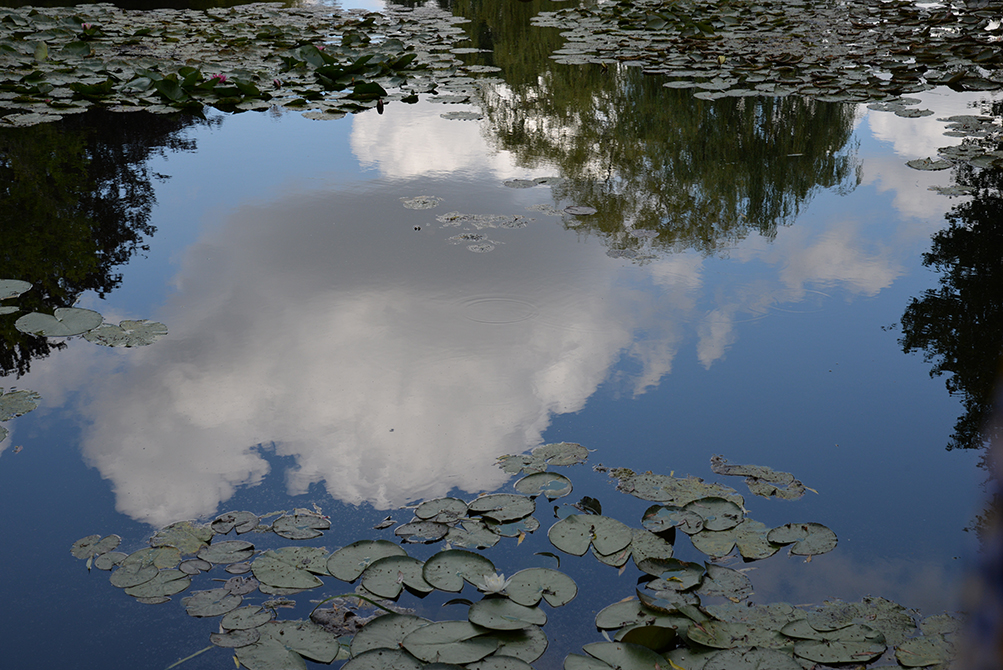
Monica Gorini has always studied clouds by researching “the whims of the sky reflected in water.” , always changing and always fascinating with their vaporous occupying the empty surfaces of lakes and rivers. She searched for them In Normandy in the jardin d’eau, but also outside the bassin of the Fondation et Maison Claude Monet, beginning with the Epte and the Seine, the rivers that Monet habitually skirted, carefully choosing the views to immortalize.
She has walked the waterscapes in the countryside around Giverny and Vernon, and along the Lot River in New Aquitaine, because every place has its views. A small movement of her body reveals new scenery, new color ranges and iridescent reflections.
Taken from the diary of Monica Gorini
“I walk on the banks of the Epte in a kind of dimension of suspension in which there is not and cannot be any trace of man. The clouds, traveling over the liquid surface, en- dow the aquatic landscape with an impalpable and evocative dimension. Impossible to objectively record this vision. Nature manifests its sacred side to speak directly to the senses.”
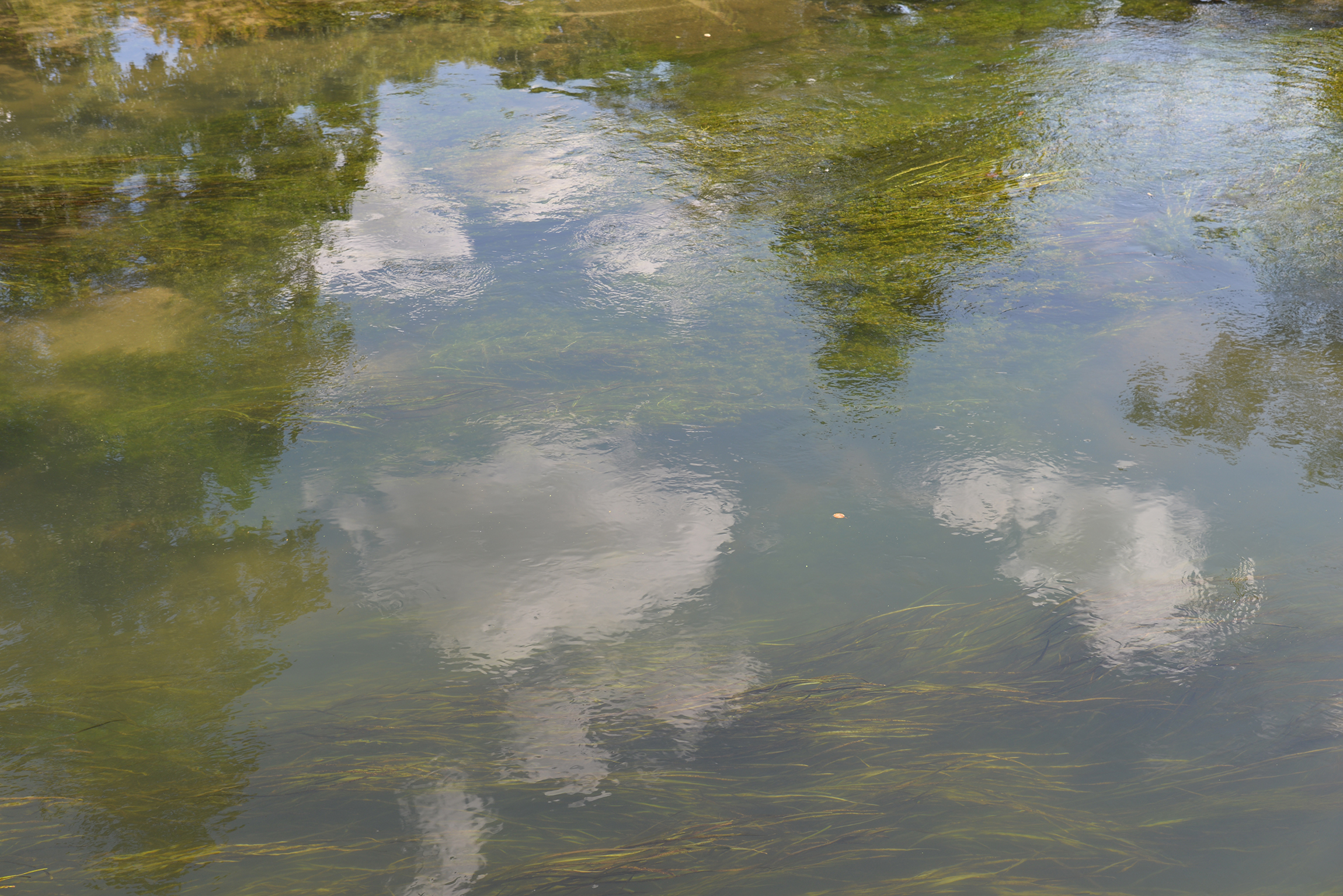
“The only natural elements: filaments of vegetation and clouds.
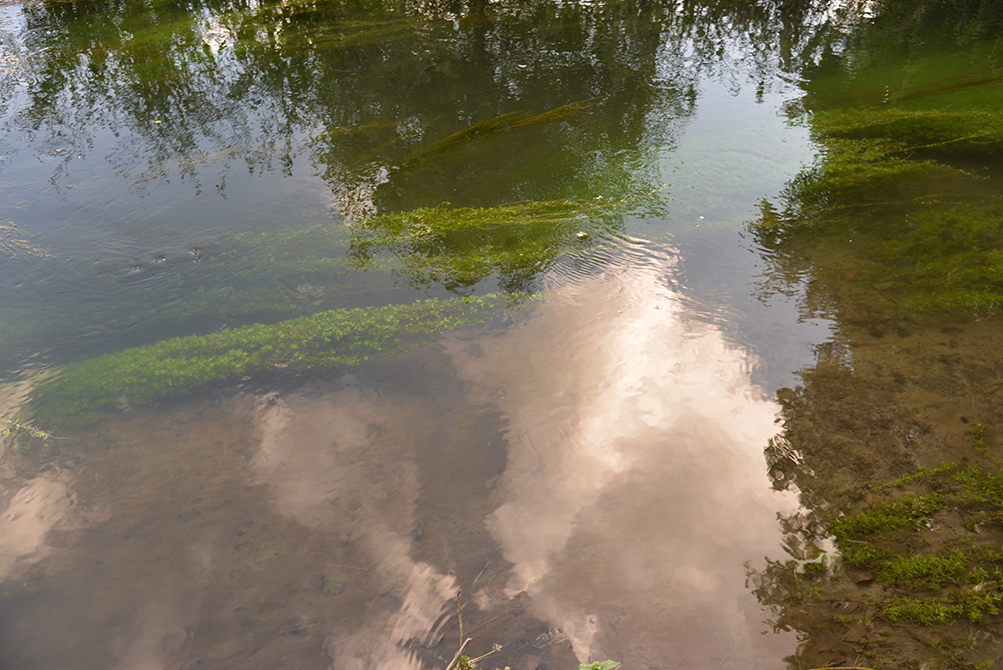
My gaze focuses with increasing intensity on the water. I choose a close perspective and I am seduced by this floating world, which at some points also has muddy tones.”
“In exploration the landscape changes.
I cannot glide in a boat level with the river, but I can go upstream, crouching on the shore or climbing on branches to try to penetrate the secrets of the landscape.
I promise myself I will return and study the effects generated by the haze on a hot and humid day. As I proceed, the impressionist views become frames. I can engage in a dialogue with the natural elements without breaking the dimension of intimacy. I con- tinue to enrich my archive with different types of views and with the whims of heaven mirrored in the river.”
///
Recitava Matsuo Bashò, tra i più grandi poeti giapponesi della poesia haiku.
I capricci del cielo
sono i semi
dell’arte.
Monica Gorini ha sempre studiato le nuvole ricercando “i capricci del cielo riflessi nell’acqua”, sempre mutevoli e sempre affascinanti con il loro vaporoso occupare le superfici vuote di laghi e fiumi. Li ha cercati In Normandia nel jardin d’eau, ma anche al di fuori del bassin della Fondation et Maison Claude Monet, incominciando dall’Epte e dalla Senna, i fiumi che Monet costeggiava abitualmente scegliendo con cura le vedute da immortalare.
Ha percorso i paesaggi acquatici nelle campagne intorno a Giverny e a Vernon, e lungo il fiume Lot, in Nuova Acquitania, perché ogni luogo ha le sue vedute. Un piccolo movimento del corpo svela nuovi suoi scenari, nuove gamme cromatiche e riflessi cangianti.
Tratto dal diario di Monica Gorini
“Cammino sulle sponde dell’Epte in una specie di dimensione di sospensione in cui non c’è e non ci può essere traccia dell’uomo. Le nuvole, in viaggio sulla superficie liquida, conferiscono al paesaggio acquatico una dimensione impalpabile ed evocativa. Impossibile registrare oggettivamente questa visione. La natura manifesta il suo lato sacro per parlare direttamente ai sensi.
“Solo elementi naturali: filamenti vegetali e nuvole.
Il mio sguardo si concentra con intensità crescente sull’acqua. Scelgo una prospettiva ravvicinata e sono sedotta da questo mondo fluttuante, che a tratti ha toni anche fangosi.”
“In esplorazione il paesaggio cambia.
Io non posso scivolare con una barca a pelo d’acqua sul fiume, ma posso risalire la cor- rente, accovacciandomi sulla riva o arrampicandomi sui rami per cercare di penetrare i segreti del paesaggio.
Mi riprometto di tornare per studiare gli effetti generati dalla foschia in un giorno caldo umido. Man mano che procedo, le vedute impressioniste diventano frame. Riesco ad aprire un dialogo con gli elementi naturali senza rompere la dimensione intimista. Proseguo arricchendo il mio archivio con diverse tipologie di vedute e con i capricci del cielo che si specchiano nel fiume.”